The Dangers of a Leaning Chimney: Why a Professional Inspection Is Essential
Primary SEO Keyword: leaning chimney
Secondary Keywords: leaning chimney repair, chimney inspection, chimney safety, chimney damage, chimney repair, structural chimney problems, professional chimney inspection, chimney foundation problems
A chimney is more than an attractive feature on your roof. It is a critical part of your home’s ventilation and heating system, helping safely carry smoke, gases, and combustion byproducts away from your living space. But when you notice that your chimney is leaning, it could be a serious warning sign that should never be ignored.
A leaning chimney may indicate structural damage, deteriorating mortar, foundation movement, water damage, or other hidden problems. While the issue may appear minor from the ground, chimney problems can become dangerous and extremely expensive if they are left untreated.
That is why having a leaning chimney inspected by a qualified professional is one of the most important steps you can take to protect your home, your property, and your family.
What Causes a Chimney to Lean?
There are several reasons why a chimney may begin to tilt or pull away from the house.
One of the most common causes is foundation movement. If the chimney has its own footing and the soil beneath it shifts, settles, expands, or becomes unstable, the chimney can gradually move out of alignment.
Water damage is another major concern. Brick and mortar are porous materials, and repeated exposure to rain, snow, ice, and freezing temperatures can cause deterioration. When moisture gets into masonry and freezes, it expands and can contribute to cracking, spalling, and weakened mortar joints.
Other potential causes include:
- Deteriorating or missing mortar joints
- Cracked bricks or masonry
- Damaged chimney flashing
- Poor original construction
- Foundation settlement
- Earth movement
- Severe weather or storm damage
- Excessive moisture penetration
- Structural deterioration inside the chimney
A chimney can sometimes lean gradually over many years, making the problem easy to overlook. Unfortunately, slow deterioration can still create serious structural and safety risks.
Why Is a Leaning Chimney Dangerous?
A leaning chimney isn’t simply a cosmetic problem.
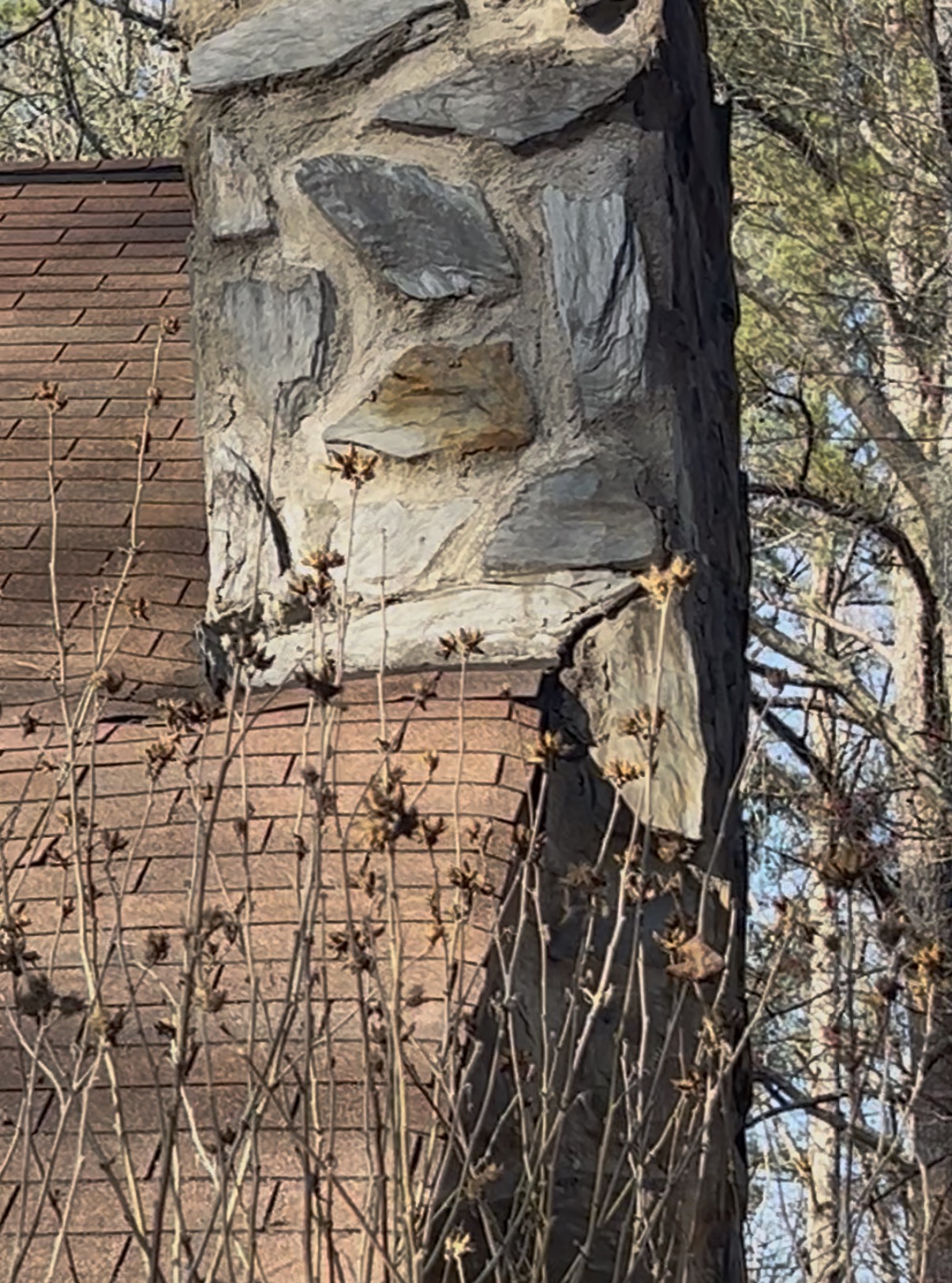
As a chimney moves out of alignment, the weight of the masonry can place additional stress on surrounding structures. In severe cases, sections of masonry may become unstable or potentially collapse.
A damaged chimney can also compromise the flue system. Cracks, deteriorated mortar, or damaged liners may allow heat and combustion gases to escape into areas where they shouldn’t.
The Chimney Safety Institute of America (CSIA) emphasizes the importance of professional chimney inspections because problems such as cracks, obstructions, and deterioration can increase the risk of chimney fires and carbon monoxide entering the home.
Carbon monoxide is particularly concerning because it is colorless and odorless, meaning homeowners may not realize there is a problem until exposure has already occurred.
If you notice a chimney that is visibly leaning, cracked, separating from the house, or showing signs of significant deterioration, don’t wait for the problem to become an emergency.
Warning Signs of Chimney Damage
Knowing what to look for can help you identify potential problems before they become more serious.
Some common warning signs include:
- A chimney that visibly leans or tilts
- Cracks in bricks or mortar
- Bricks that are loose, damaged, or falling
- Separation between the chimney and the house
- Water stains around the fireplace or chimney
- Damaged flashing around the roof
- Pieces of masonry on the roof or ground
- A damaged or deteriorating chimney cap
- Crumbling mortar joints
- Unusual odors or smoke entering the home
- Evidence of chimney fires or excessive creosote
However, visual inspection from the ground isn’t enough to determine the true condition of a chimney.
Some of the most important problems can exist inside the flue, behind walls, in attics, or beneath other building materials.
Why You Need a Professional Chimney Inspection
When you see a leaning chimney, it can be tempting to simply monitor it or attempt a quick repair. That’s a dangerous gamble.
A qualified chimney professional has the training, equipment, and experience necessary to investigate both visible and hidden problems.
Industry inspection standards recognize different levels of chimney inspection depending on the circumstances. A basic Level I inspection examines readily accessible portions of the chimney, while more comprehensive inspections can include accessible areas of attics, crawl spaces, basements, and internal video examination. Where concealed hazards cannot otherwise be evaluated, a Level III inspection may be necessary.
This is particularly important when structural movement or significant damage is suspected.
A professional can determine whether your chimney needs repair, rebuilding, stabilization, or further structural evaluation rather than simply treating the visible symptoms.
For homeowners looking for additional chimney-safety information, the are an excellent external resource.
Don’t Ignore a Leaning Chimney
The biggest mistake a homeowner can make is assuming that a leaning chimney is “just an old-house problem.”
Even if your chimney has looked slightly crooked for years, changes in its position, new cracks, water intrusion, or loose masonry should be taken seriously.
A professional inspection can provide peace of mind and identify potentially dangerous problems before they escalate into costly repairs.
If your home has recently experienced severe weather, an earthquake, significant foundation movement, or another event that could have affected the chimney, professional evaluation becomes even more important. CSIA guidance notes that external events can cause chimney damage that may not be obvious from the exterior alone.
For related information, consider linking this article internally to your [Chimney Inspection Services] page, [Chimney Repair Services] page, and [Foundation Repair Services] page. These internal links can help visitors find the right service while also strengthening your site’s SEO structure.
Protect Your Home With a Professional Chimney Inspection
A leaning chimney is a powerful warning sign that something may be wrong with your home’s masonry or structural system. Ignoring it could allow a relatively manageable problem to develop into dangerous, disruptive, and expensive damage.
Don’t take chances with your chimney.
If you notice leaning masonry, cracks, loose bricks, water damage, or separation from your home, contact a qualified chimney professional for a thorough inspection. The right professional can identify the cause of the problem, explain your options, and recommend the safest solution.
Regular chimney maintenance and inspections can help uncover problems before they become major hazards. CSIA recommends annual inspections by qualified chimney professionals and emphasizes addressing necessary cleaning and repairs.
Your chimney protects your home — make sure your home is protecting it, too.
Recommended External Resources
- — Chimney safety, inspections, maintenance, and professional certification information.
- — Information about professional qualifications and certification.
- — Information about chimney and venting systems and carbon monoxide risks.