The Hidden Dangers of Improper Deck Construction: Why Professional Deck Design Matters
A backyard deck should be a place where families gather, friends entertain, and homeowners relax. Unfortunately, when a deck is improperly designed or poorly constructed, it can quickly become one of the most dangerous structures on a property. Every year, thousands of deck-related injuries occur due to structural failures, inadequate connections, deteriorated materials, and construction practices that fail to meet modern building standards.
Whether you’re planning a new deck, purchasing a home with an existing deck, or maintaining one that’s decades old, understanding the risks of improper deck construction is essential. A professionally designed and properly inspected deck not only protects your investment but also safeguards everyone who uses it.
Why Deck Construction Is More Complex Than It Appears
Many homeowners assume a deck is simply a wooden platform attached to a house. In reality, a safe deck requires careful engineering, proper load calculations, quality materials, and precise installation techniques.
Critical components include:
- Proper footings below the frost line
- Adequately sized support posts and beams
- Correct joist spacing
- Secure ledger board attachment
- Proper flashing to prevent water intrusion
- Safe guardrails and stair construction
- Approved fasteners and structural connectors
If any one of these elements is installed incorrectly, the structural integrity of the entire deck can be compromised.
The Serious Risks of Improper Deck Construction
1. Deck Collapse
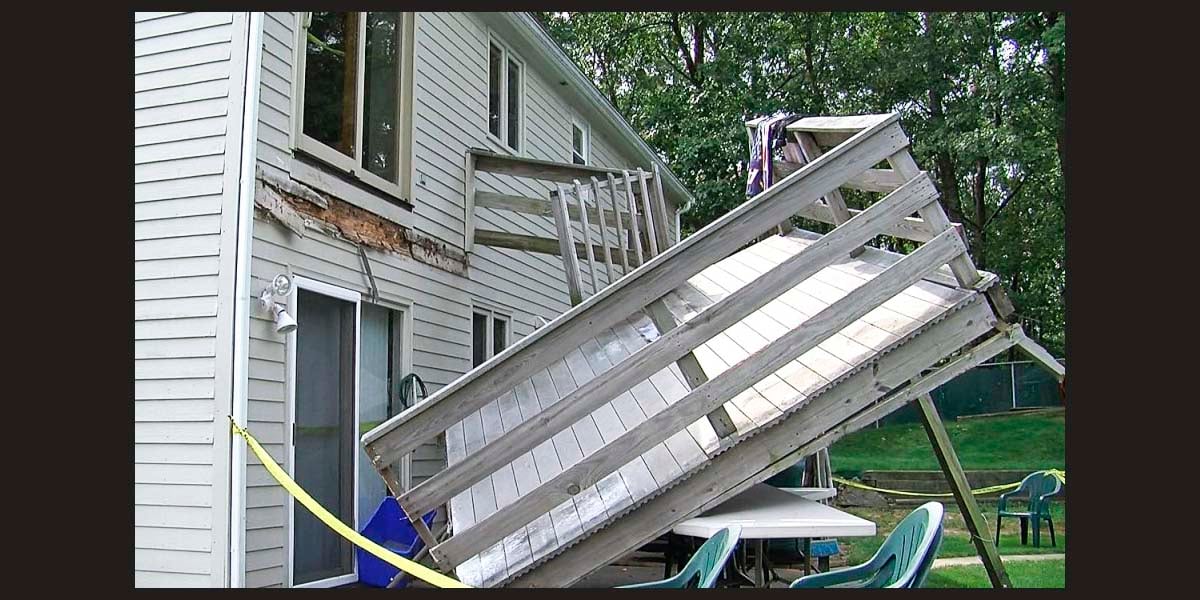
The most catastrophic consequence of poor deck construction is structural collapse. Many deck failures occur during gatherings when additional weight places excessive stress on weakened framing or improperly fastened ledger boards.
Common causes include:
- Undersized framing members
- Improper fasteners
- Rotting structural lumber
- Loose or missing connectors
- Inadequate foundation support
A sudden deck collapse can lead to severe injuries, significant property damage, and expensive legal liability.
2. Water Damage and Hidden Wood Rot
Moisture is one of the biggest threats to any exterior structure.
Without proper flashing and drainage, water can infiltrate behind the ledger board where the deck connects to the home. Over time, this moisture causes wood rot that often remains hidden until major structural damage has already occurred.
Regular inspections can identify these concealed issues before they become dangerous.
3. Unsafe Railings and Stairs
Loose railings are more than an inconvenience—they’re a serious fall hazard.
Improperly installed guardrails, loose balusters, uneven stair risers, or missing handrails increase the risk of accidents, especially for children and older adults.
Many older decks were built before today’s safety standards and may no longer comply with current building codes.
4. Inadequate Structural Connections
The strongest lumber in the world won’t compensate for poor connections.
Decks rely on specialized structural hardware to transfer loads safely from the deck to the home and ultimately to the foundation.
Improper nails, missing bolts, corroded fasteners, or incorrectly installed metal connectors can significantly weaken the entire structure.
Why Professional Deck Design Matters
Professional deck design goes far beyond aesthetics.
An experienced designer or qualified contractor considers:
- Expected live loads
- Dead loads
- Soil conditions
- Drainage
- Local climate
- Building code requirements
- Material performance
- Long-term durability
Proper planning helps prevent costly repairs while extending the life of the structure.
A professionally designed deck is safer, more durable, and often adds greater value to your home.
The Importance of Home Inspections
Even well-built decks require periodic evaluation.
Weather exposure, moisture, insects, and normal aging gradually weaken structural components over time. Small problems that go unnoticed today can become major safety hazards tomorrow.
A professional home inspection can identify:
- Wood rot
- Structural movement
- Improper ledger attachment
- Foundation settlement
- Loose railings
- Stair defects
- Corrosion of connectors
- Unsafe modifications made by previous homeowners
Early detection often saves homeowners thousands of dollars in repair costs while preventing dangerous failures.
Common Warning Signs Your Deck Needs Attention
Watch for these warning signs:
- Wobbling or excessive movement
- Soft or spongy wood
- Visible wood rot
- Rusted hardware
- Cracked support posts
- Loose railings
- Sagging beams
- Separation between the deck and the house
- Standing water after rain
- Large cracks in framing members
If you notice any of these conditions, schedule a professional inspection before continuing to use the deck.
Protect Your Family and Your Investment
A deck is one of the most valuable outdoor living features a homeowner can own—but only when it is built and maintained correctly.
Professional design, quality construction, routine maintenance, and periodic inspections work together to reduce safety risks and extend the life of the structure.
Whether you’re buying a home, selling one, or simply ensuring your family’s safety, having your deck evaluated by an experienced home inspector provides peace of mind that cannot be overstated.
Schedule a Professional Home Inspection
At VGHI, we believe informed homeowners make safer decisions. Our comprehensive home inspections evaluate visible structural components, including decks, porches, and exterior systems, helping identify potential safety concerns before they become costly problems.
If you’re purchasing a home or want confidence that your existing deck remains structurally sound, contact VGHI today to schedule a professional home inspection.